
Channel Your Heaven
I spent last week camping off grid with my family along the Crooked River in a beautiful basalt canyon. I’d been looking forward to that trip for months and it was even better than I'd been hoping - for me and my family: as we were hiking in Bend a few days later, my daughter told me that she hadn't felt that calm and stress-free in many months.
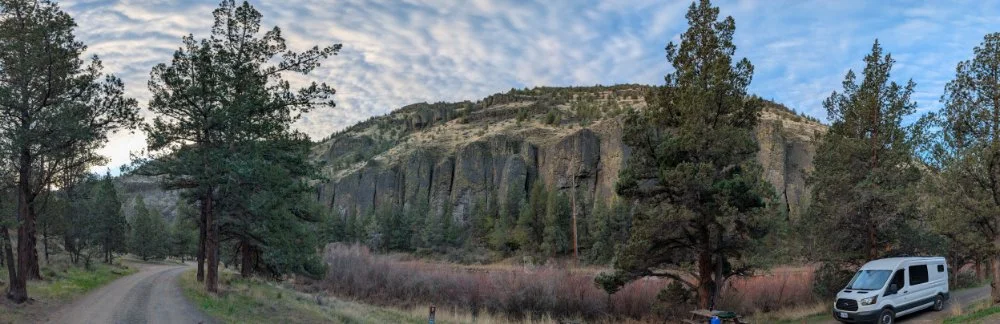
Panoramic view of our first campsite along the Crooked River in Central Oregon. Photo Credit: Geoff Staton
I can picture her now, on her back, in the grass, under the bright blue sky. Knees up, book in hand. River flowing gently in and around the rocks five feet in front of her. Songbirds chirping. Kingfishers diving. And the pair of bald eagles, in the majestic ponderosa pine around the bend up river, guarding what we think was at least one eaglet.
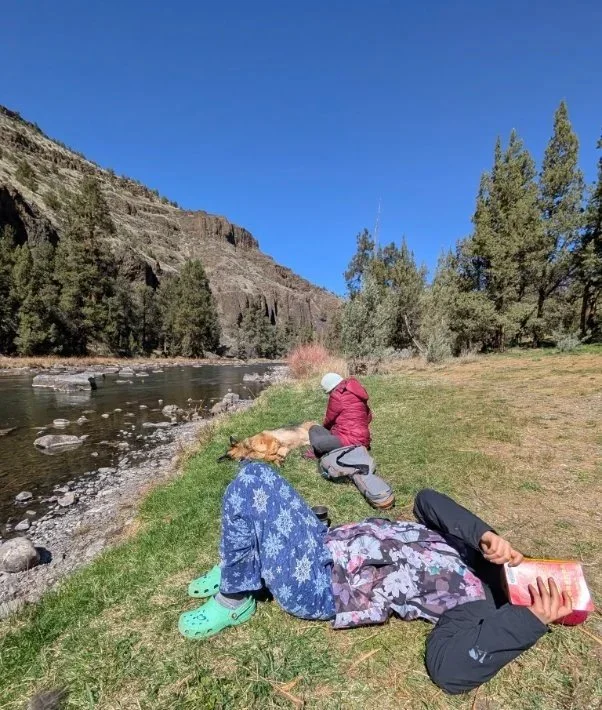
Soaking it in on the banks of the Crooked River in Central Oregon.
Photo Credit: Geoff Staton
They call it soft fascination, as part of the Attention Restoration Theory. This idea that nature has the ability to calm and soothe our nervous system by restoring our stressed-out brains and allowing our focus to be gently engaged by the natural world around us. This is my experience every time I’m out there off grid. And I’m so happy that it was hers this time, as well.
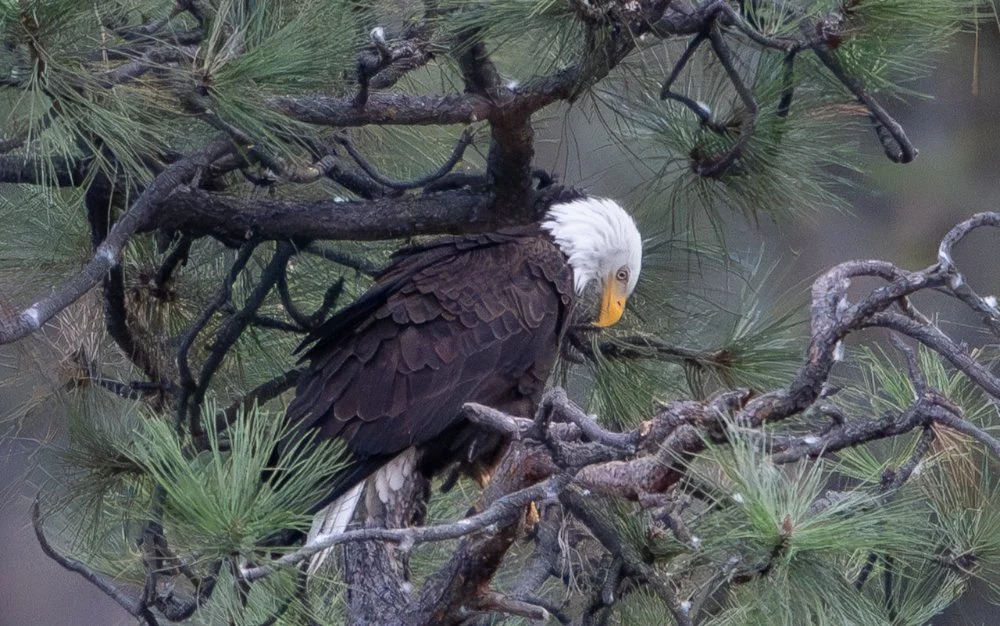
One of the bald eagles perched near the nest. Photo credit: Mark Grissom
While she doesn’t carry the same concerns as many of us business owners and professionals, she is an intelligent, climate-aware teenager with a mix of hormones that most of us haven’t experienced for many years. And as the daughter of a recovering perfectionist, she holds herself to a very high standard - one that many of us can relate to. She worries about AP test scores and maintaining a GPA that’s high enough to secure a solid future. Add to that the stress of navigating social connection and friendships at 17 - never simple or easy.
So, when she came to me last night to say goodnight, it didn’t surprise me that she was worried about getting enough sleep and missing the bus for the early field trip this morning. She often struggles to fall asleep, her mind full of reflections and obligations and what-ifs. I often remind her that she only has one job at night - to calm her mind and relax those thoughts enough to fall asleep. Everything else will be waiting for her in the morning if she wants to pick it up again. Last night my advice was similar, but I followed it up with a more specific question about how she might actually calm her mind. And her response made me so happy:
I’ll remember that spot on the river and how I felt when I was there.
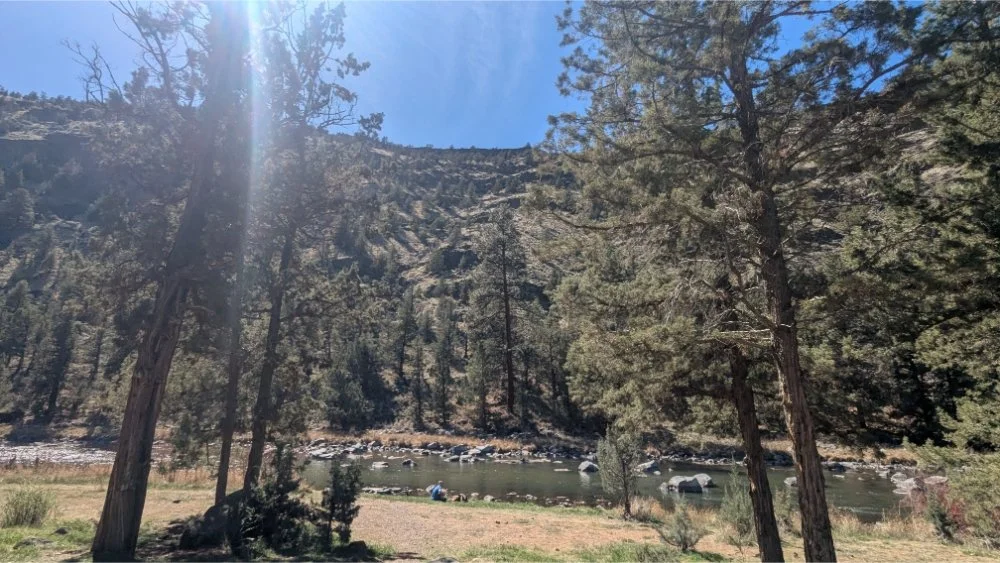
Our 2nd campsite on the Crooked River, and one of my new beloved places. Photo credit: Tamara Staton
Yes! Exactly that.
Being able to visualize the places that we love and tap into those feelings in our body in the present when stress looms is such a powerful way for us to soothe our nervous systems so we can relax. And when we’re able to relax, we have so much more space and capacity for doing the things we need and want to do in the world.
Before she went upstairs, I wanted to offer something specific to help her more easily access her calm on the river. If you’re a visual person, like my daughter and I are, you might visualize your beloved place. Maybe you close your eyes or soften your gaze and then envision the details of the surroundings. The shapes, the forms, the colors - the blues, the greens, the browns. You might be able to hear the sounds around you, and call in the temperature as well. I can sort of hear the song birds and scream of the eagle from the river - but honestly it feels more like a memory than a sense.
And then, you notice yourself there. Are you sitting? Standing? Lying down? Are you still or moving? Alone or with others? Once you’ve got a solid image of you in the midst of it all - even just a memory or sense - turn your attention to your body in that place. What did you feel as you were there? Were you relaxed? At peace? Did things feel easy? Were you tired? You might be able to tap into these feelings as you’re exploring them, and then check in with your body, in general, to explore: where did you feel these feelings? How did relaxation, ease, joy or peace show up in your body? If that feels challenging, you might explore specific areas of your body: if you were lying down, can you feel your back where it touches the ground? If you were standing, can you feel your feet making contact with your shoes - or the earth beneath you?
And then, start to bring those sensations into your current experience. You might start with the contact of your body to the earth, and then expand that into various sensations that are more connected to your emotional experience. You may have easy access with general inquiries: Where does joy live in your body? What part of your body holds your relaxation? If that feels challenging to answer, you might explore one part at a time: Can I feel peace in my left leg? My right forearm? Start with one pleasant emotion and move from part to part until you find a ‘yes’. Yes, I feel relaxed in my chest. Or, yes, I feel peace in my right foot. And then, turn all of your attention to that spot or area and just be with that feeling. Notice its edges, if you can. Where it starts and ends.
If you stay with this feeling for a bit, being gently curious and observant - without getting in your head about it - you can channel your heaven. You can bring the peace and joy and ease and grace from the places that feed you into the moments that otherwise leave you feeling stressed. And this is exactly what we need in a world full of chaos. An ability to flow. Like that river. Moving in and around and over rocks, boulders and bends that would otherwise feel like obstacles. Where is your heaven, and what would it feel like to bring it into your everyday?
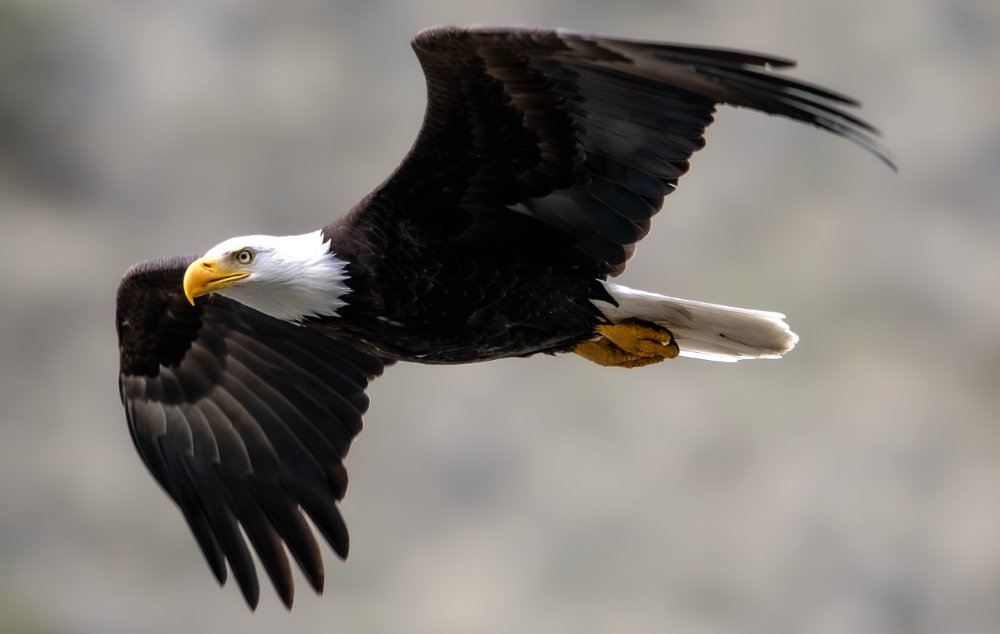
One of the eagles, soaring near the nest. Photo Credit: Mark Grissom
