
10 Tips for a Restful Vacation in a Chaotic World
All photos and videos by Geoff and Tamara Staton
I recently road-tripped to Colorado from Oregon. Me and my family of three traveled and camped in our van, visited all four national parks and toured three colleges. That might not scream dream vacation - it's a lot to pack into a confined living space, over the span of three weeks. But while it was understandably a roller coaster of experiences, the intensity of it all inspired me to create a list of tips in hopes of sharing some of the best decisions I made and a few I’d change for next time.
Because as purpose-driven founders and leaders committed to creating impact, we need rest. It helps us carve out more time and space for creating meaningful change. But vacation isn’t always easy to come by…so once we do make the time, it matters that it’s as restful and fulfilling as possible. I hope this helps…
10. Plan what you love
This trip was the culmination of 30 years of ideating. When I was 19, I failed to land a dream job in Breckinridge, CO guiding outdoor adventures for youth. While I went on lead wilderness trips elsewhere, Colorado stayed on my bucket list. For years, in fact, I thought I'd end up living there. But Portland won my heart and life took me elsewhere, so this trip turned out to be my first. Passionate about mountains, rivers, lakes and opportunities to explore the wilderness, Colorado felt like my perfect playground. For you, it might be the beach. Or downtown NY. Going somewhere that excites you, where you know your nervous system has a chance to relax - that's key to creating a restful vacation.
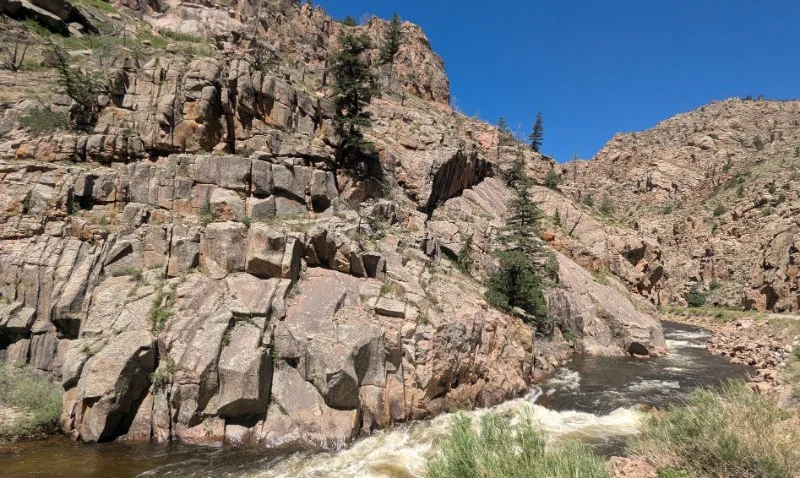
My new favorite canyon along the Poudre River in Northern Colorado, just down the road from our campsite
9. Bring less stuff
I know this mantra and tried to abide - but we definitely had too much stuff. It was constantly in our way, causing far too many jenga-like experiences in our small van. Options are nice, especially going from 30 degrees at elevation in Rocky Mountain National Park to over 95 in Great Sand Dunes and Mesa Verde. But seriously. Bring less. Very worth it, I promise.
8. Consider extreme weather
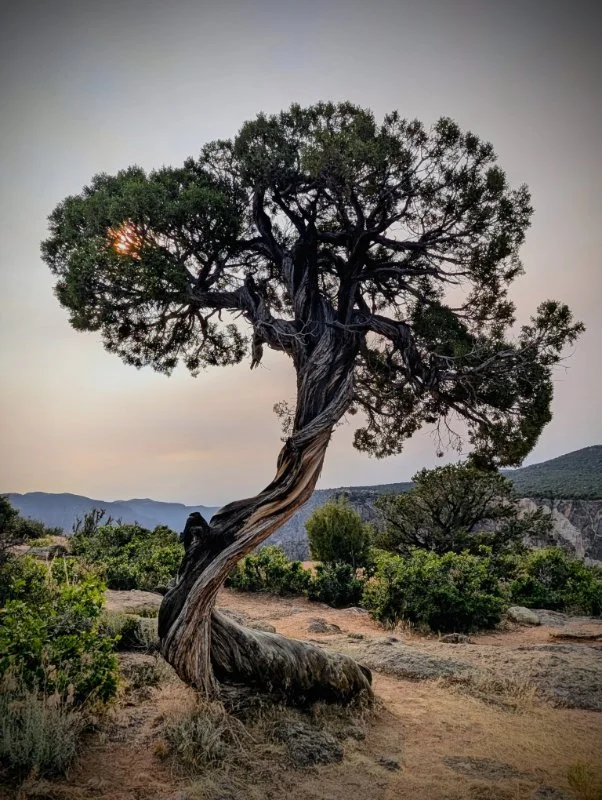
A smoky sun and ancient Utah juniper at the edge of Black Canyon of the Gunnison
As I was asking for travel suggestions, my friend in Durango reminded me that I would need to stay flexible and be ready to pivot in response to wildfires. It was a humbling reminder that, as our world warms, weather continues to become more erratic and unpredictable, making it harder to do and enjoy many of the activities and areas we once could. Snowpack was at an all-time low across the mountain West this year, meaning lower river levels and higher wildfire risk.
While we can't control seasonal extremes, we can plan around them - like traveling earlier in the summer. That worked for us this year, traveling in early and mid June. We had amazing blue skies for the majority of our trip, and were only smoked out during our last week. This was a huge bummer, as it directly impacted a canyoneering experience we had planned (a deep disappointment on top of low water levels that negatively impacted our rafting experience). But I am grateful for our plans to travel early, since it gave us blue skies for most of our trip.
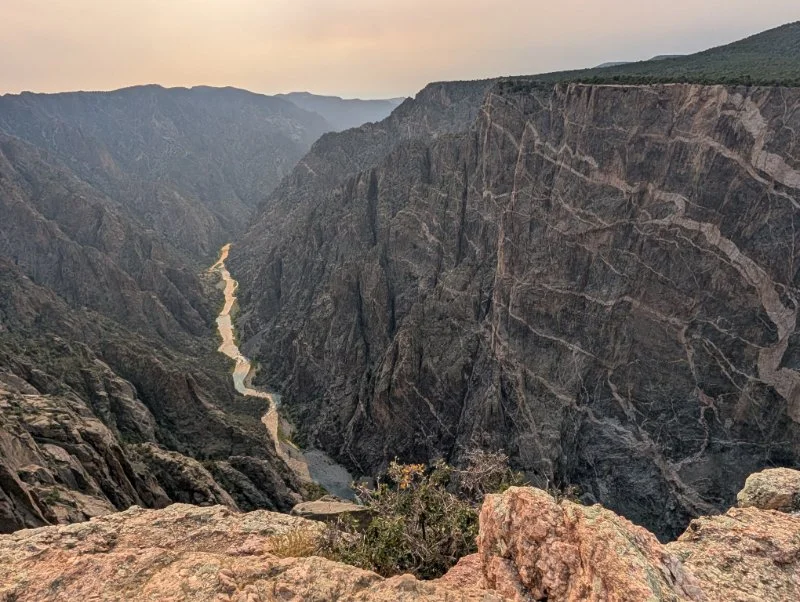
Black Canyon of the Gunnison National Park at sunset, as the wildfire smoke was rolling in
7. Plan for circumstances
We packed for the weather and activities we expected, as we all do. We don't have AC in the back of our van, for example, and dogs aren't allowed on longer park trails. So, leaving them at home, while expensive and full of effort, was an easy choice (and one that was seriously worth it!).
But, as much as I’d read about it, high altitude was harder to plan for. We hydrated and drank electrolytes. We did short hikes on day 1 and 2. It worked out, but we rearranged plans as we learned the park's layout. I'd been so eager to secure campsites in Rocky Mountain that I hadn't processed where exactly we'd need and want to be. As much as I planned, more and earlier would have been helpful in this case. And, for the record, altitude sickness sucks. 🫤😉
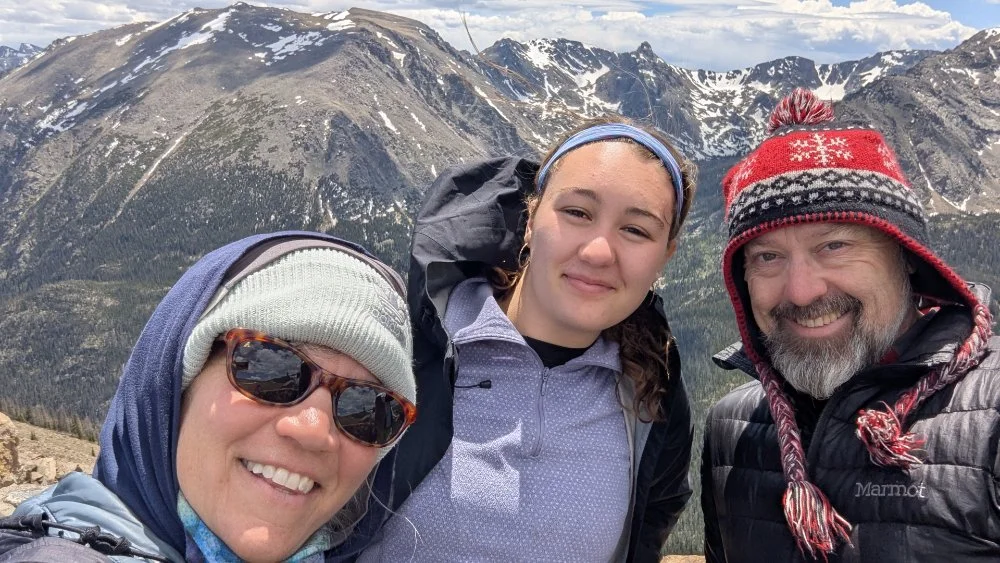
Me, my husband and our daughter, touching the sky at the top of Rocky Mountain National Park - 11,700ft
6. Allow time
For rest. For exploration. For spontaneity. For travel and the whole vacation, in fact. The three of us arranged our lives so we could be away for multiple weeks, and I was intentional about leaving enough time to travel there and back so that we didn't have marathon days behind the wheel. But as I mentioned above, for most of the trip, we moved too quickly from place to place without leaving enough time to really explore and just be. And that had a huge impact on our moods over time, and on our perspective on the trip as a whole. This tip deserves to be on this list twice…
5. Invite itinerary perspective
Not sure about you, but I'm the primary planner in my family. I was the one who knew where we'd be (most) every night and generally what we'd be up to (most) every day. While my husband definitely helped here and there, I didn't explicitly ask him - or anyone else for that matter - to zoom out and consider our itinerary as a whole. And based on my habit to overschedule - in my professional and personal life - that would have been very helpful. While exciting initially, being in a new place every night became overwhelming. It drained us of energy and left us feeling rushed. It would have been helpful to act on this self-awareness and invite someone to offer perspective that I simply didn't have in my eager beaver attempt to see (nearly) the whole state.
4. Create opportunities for connection
Spider on a window at dinner time…
Not every vacation can include all the things. But when the opportunity exists, I highly recommend making time to visit old friends and new ones. At one point, my husband and I reflected on how we ended up spending more time with newer friends and acquaintances than those that we've known for years.
It was lovely to connect with all of them, and we very much enjoyed all of our adventures, including the discovery of the Troll in Breckinridge (and around the world!); playing pickleball at a local block party in Arvada; and doing some spider-watching outside a lovely gallery in Durango.
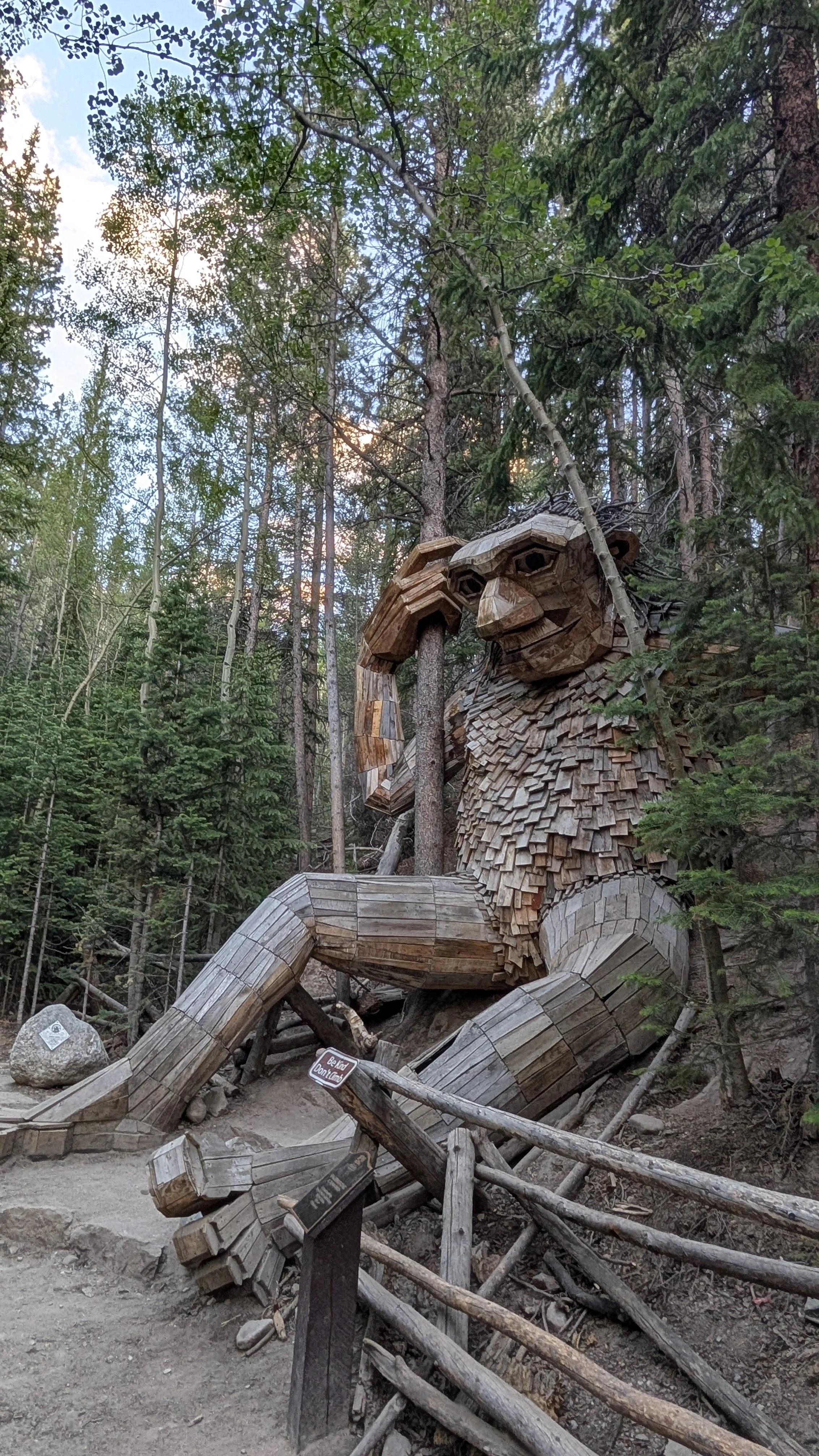
“Isak Heartstone” along the Trollstigen Trail in Breckinridge, CO. Created by Danish artist Thomas Dambo.
3. Integrate nature
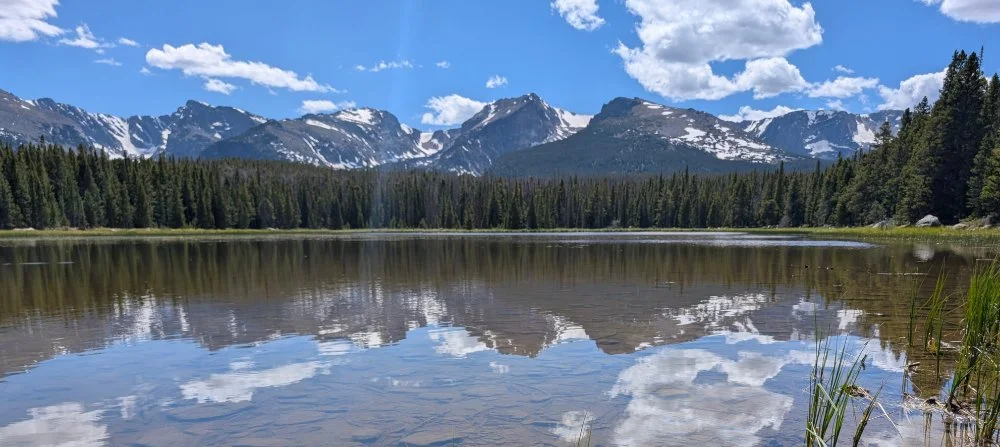
Taking in Bierstadt Lake in Glacier Basin of Rocky Mountain National Park - 9419ft
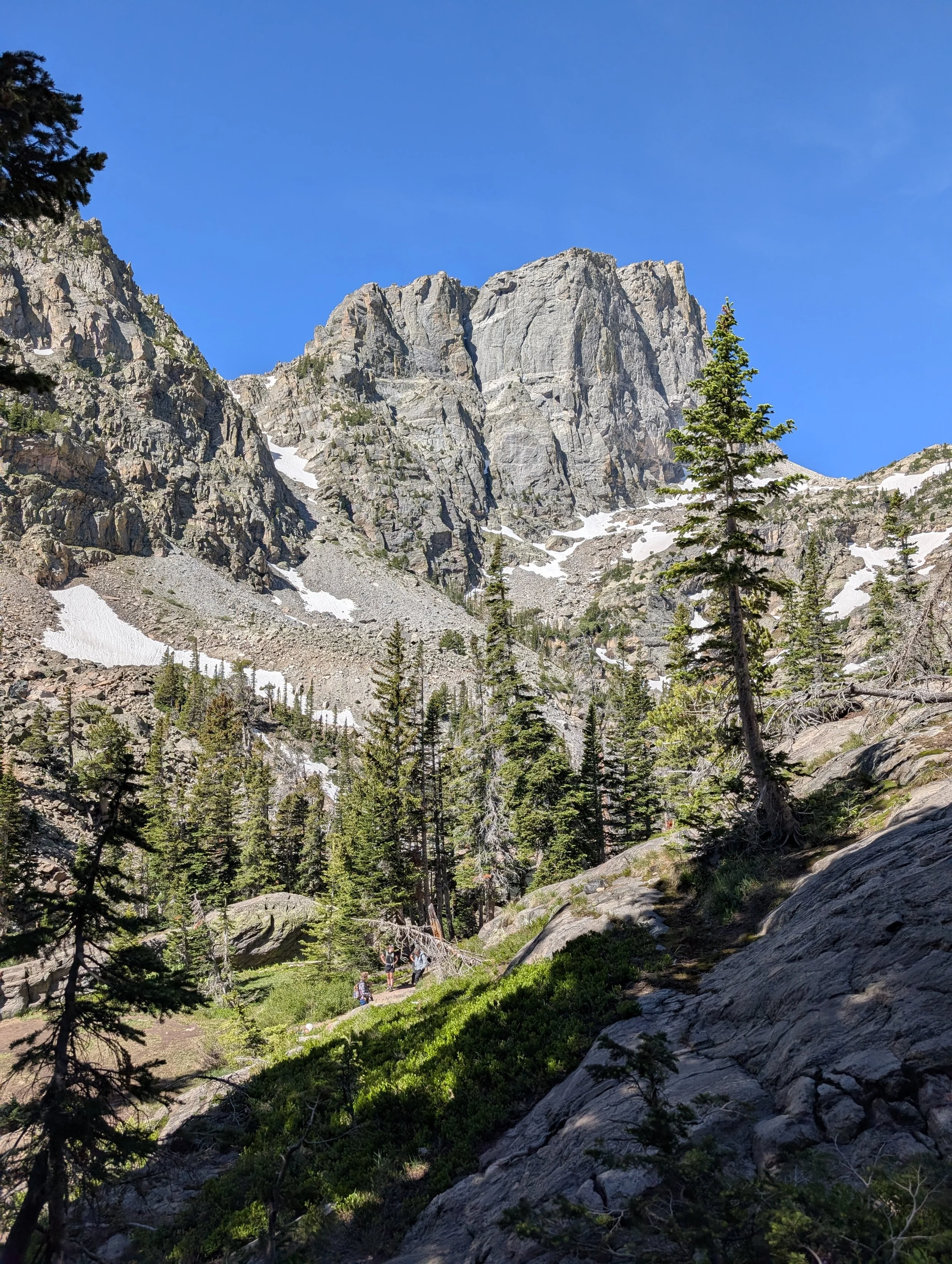
Descending from Emerald Lake in Glacier Basin
Nature is powerful. As the source of our own makeup, it has an inherent ability to help us recharge and reinvigorate. Some vacations may allow for easy integration of nature. Walking on the beach. Paddle boarding on the river. Strolling through a local neighborhood or park under a canopy of trees. Whatever the activity - or lack thereof - surrounding ourselves with the natural world has far reaching benefits.
For us, this was the highlight of our vacation. I actually planned enough time (3 days!) in Rocky Mountain National Park, which was clutch for allowing the altitude sickness to subside. Having the opportunity to hike to, hang out at, and really take in seven Alpine lakes (at or above 8000-11000ft) - moments that served as the pinnacle of what I'd been envisioning about my time in Colorado. Giving ourselves enough time to acclimatize so we could hike a loop to six of those epic lakes over 11 miles in one day felt like the perfect reward for all that planning. I will be returning to Mills Lake again and again, in my mind, to catch my breath and tap into the energy that drives me.
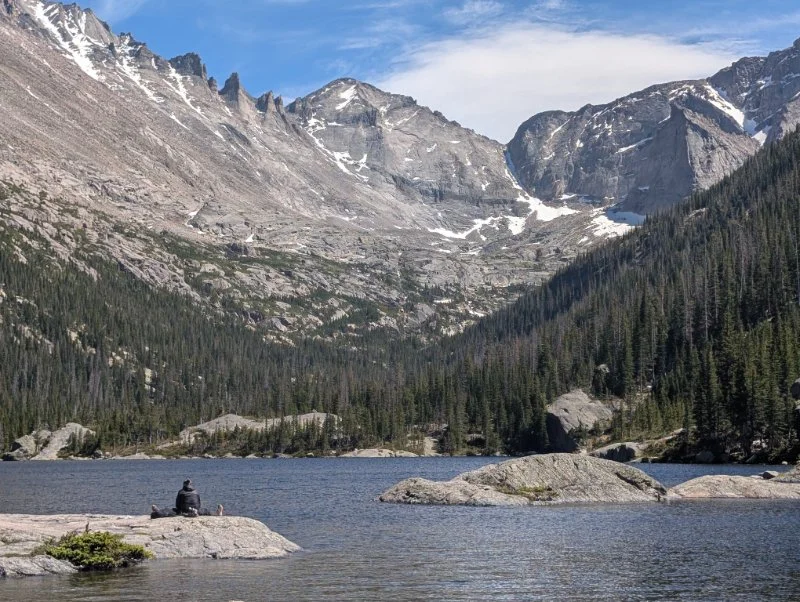
Tamara taking in Mills Lake in the Glacier Basin area of Rocky Mountain National Park
2. Allow for transition
My original plan was to leave Oregon on a Tuesday and arrive home on a Sunday, leaving enough time to return to work on Monday. With the wildfire smoke rolling in so quickly, however, we decided to cut our trip short and come home on a Friday. While initially disappointed, I was reminded of the value of transition time. Having a weekend to unpack and unwind from the natural stress that travel creates is incredibly valuable. It gives you time to reflect on experiences and consider perspectives that are unavailable to you when you're in the process of traveling.
1. Relish
Our trip was anything but perfect. I’d hoped to mountain bike more, and take more hikes. I yearned for more lakes and time with friends. But I also appreciate multiple moments throughout our trip where I was able to be fully present in the surrounding beauty. Feeling teary-eyed during our Powerhouse Tour at CSU, reflecting on the impactful renewable energy projects coming out of that building (and how our daughter might be a part of that one day). Sitting on the banks of the Poudre River, grateful for the rushing water and what that inspires in me. Watching our daughter dip into the frigid waters of Mills Lake where solitude afforded hours of contemplation. And the Milky Way. And red rock canyons of ancient civilization. And that collared lizard.
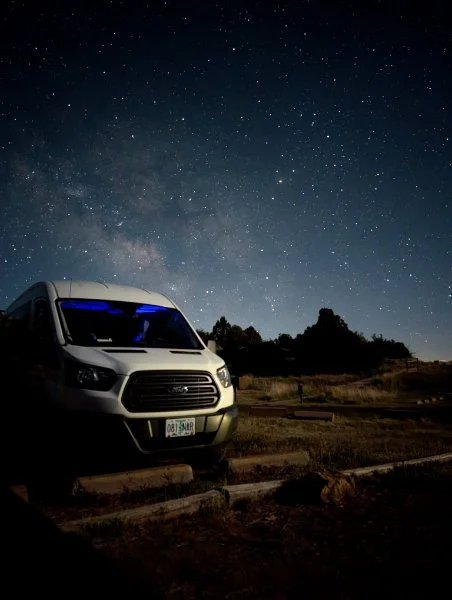
Mr. Vancy Pants and the Milky Way

Methane sniffing robot dog at CSU
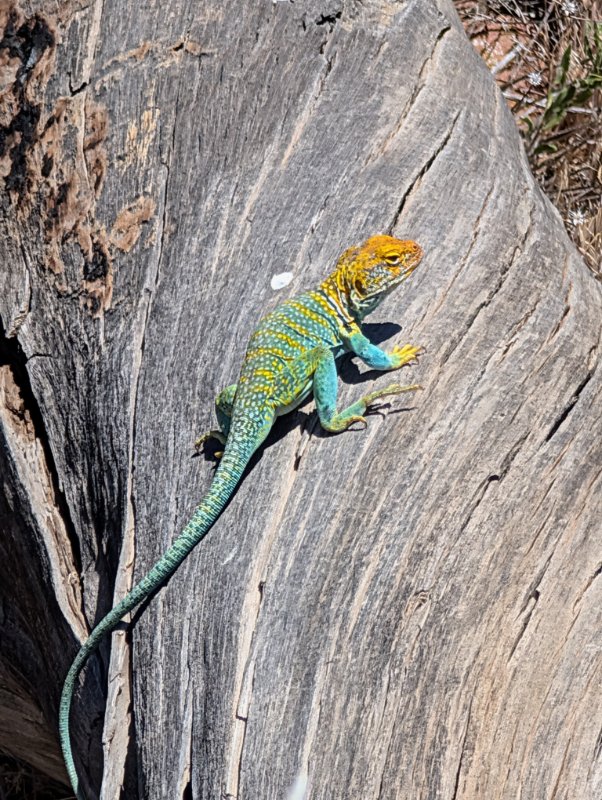
Collared lizard at Mesa Verde NP
Being able to be fully immersed in beautiful moments gives us strength over distraction and stress. That's the practice, really: letting a handful of beautiful moments outweigh the mess around them, until what feels like chaos softens into something closer to rest.
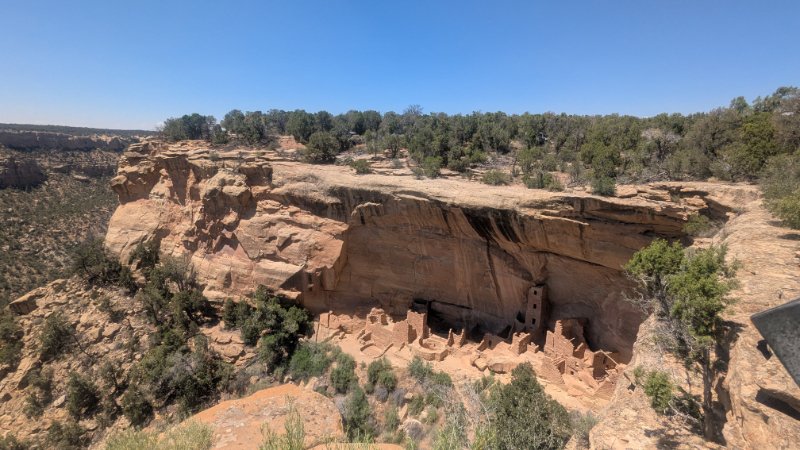
One of many pueblos at Mesa Verde National Park
And with this, I wish for your travels this summer and beyond to be filled with wonder, connection, and the kind of rest that lasts longer than the trip itself.
